Software engineers with RSU-heavy comp
Software engineers with RSU-heavy comp · Dual-engineer households
RSUs, liquidity events, and retirement trade-offs explained with charts engineers can stress-test.
$148K
Median tech salary (BLS 2024)
4-yr
Typical RSU vesting schedule
60%
Engineers underestimate equity tax

Net Pay Estimator
Illustrative$29,043
Federal
$11,220
State
$12,623
FICA
32%
Eff. Rate
Illustrative estimate only — not tax advice. Uses simplified 2025 federal brackets and estimated state effective rates. Verify with a licensed CPA or tax professional.
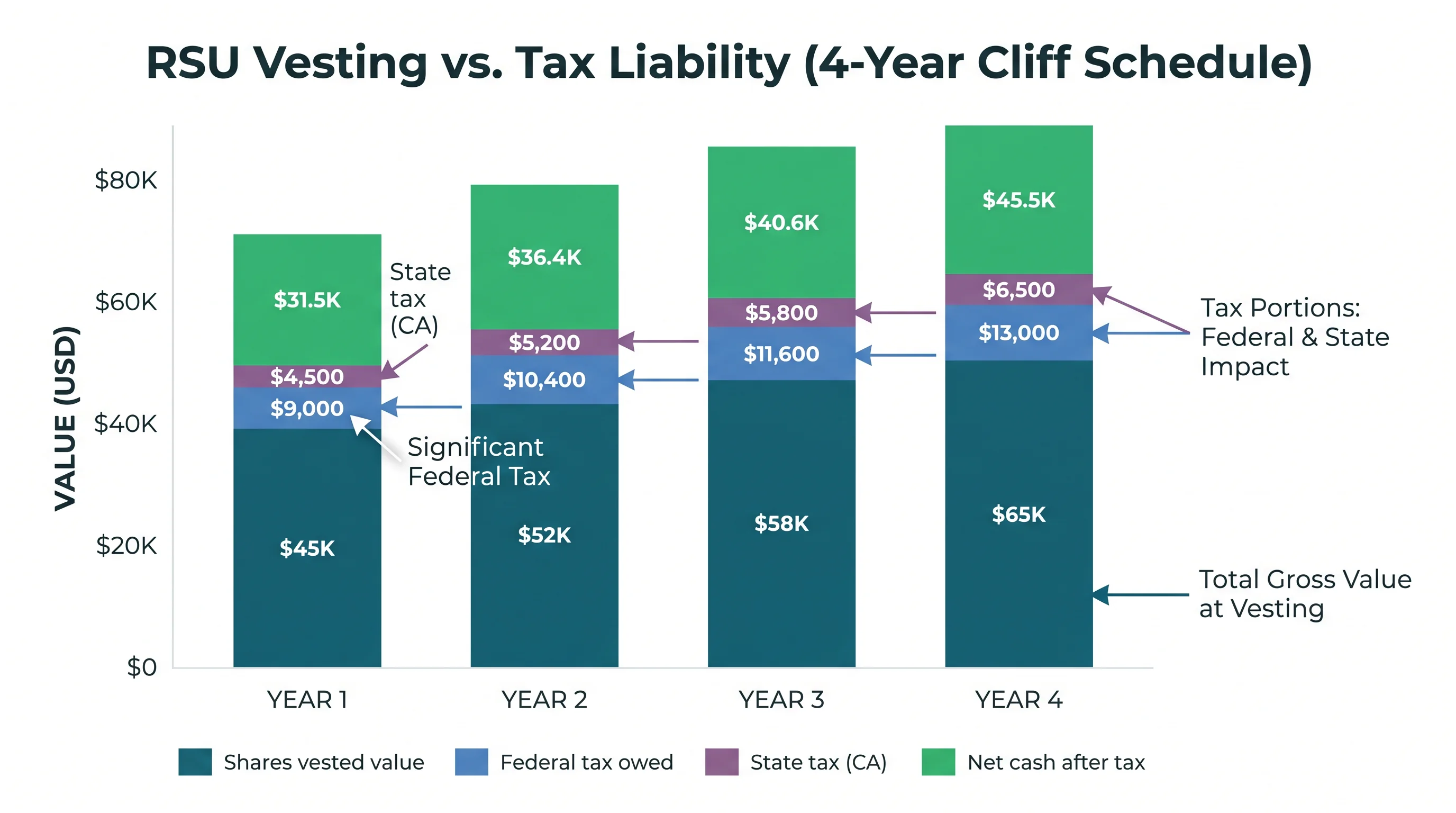
RSU vesting vs. tax liability — 4-year schedule — Illustrative estimates only. Not financial advice.
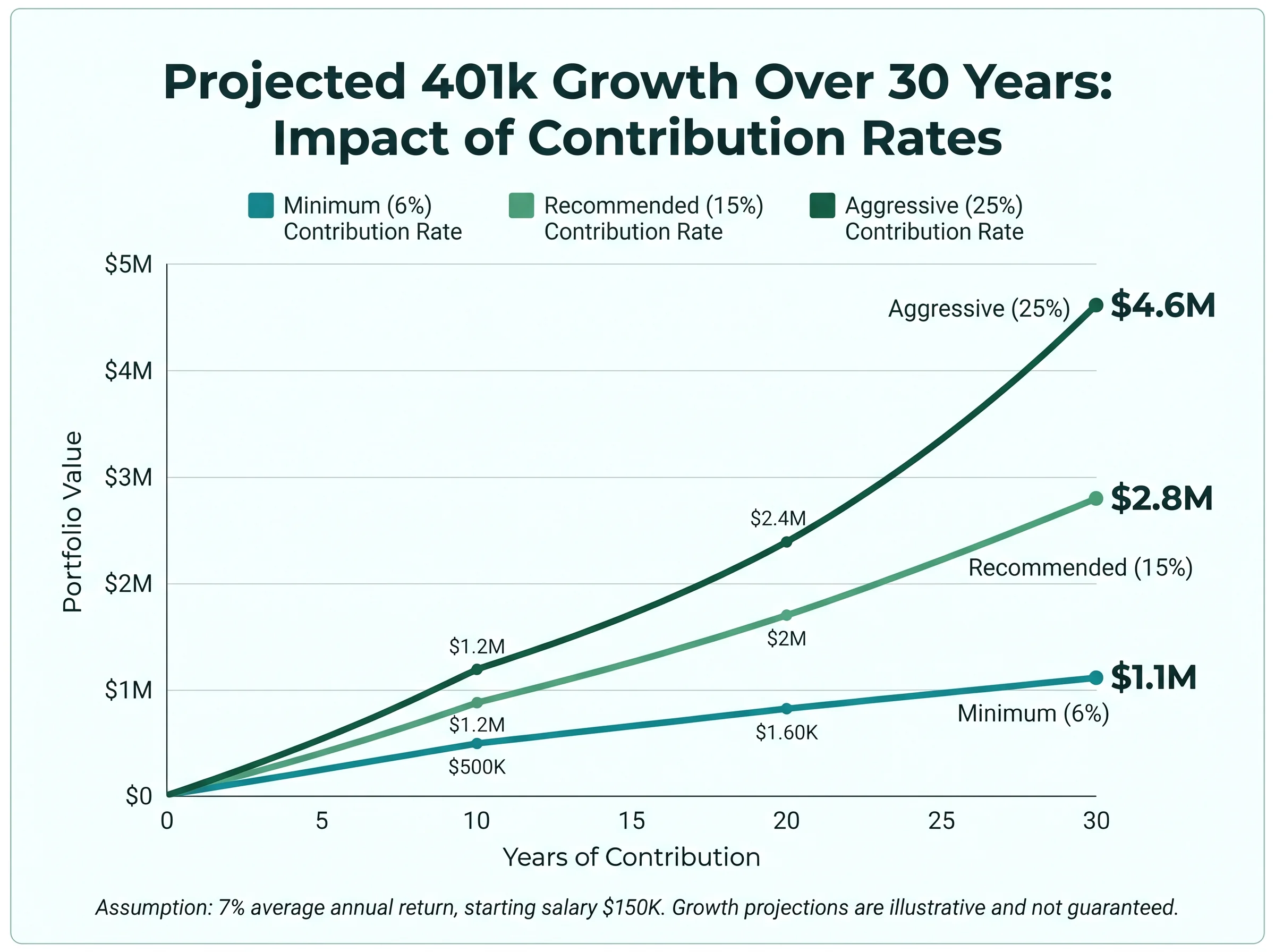
401(k) compound growth over 30 years by contribution rate — Illustrative. Not financial advice.
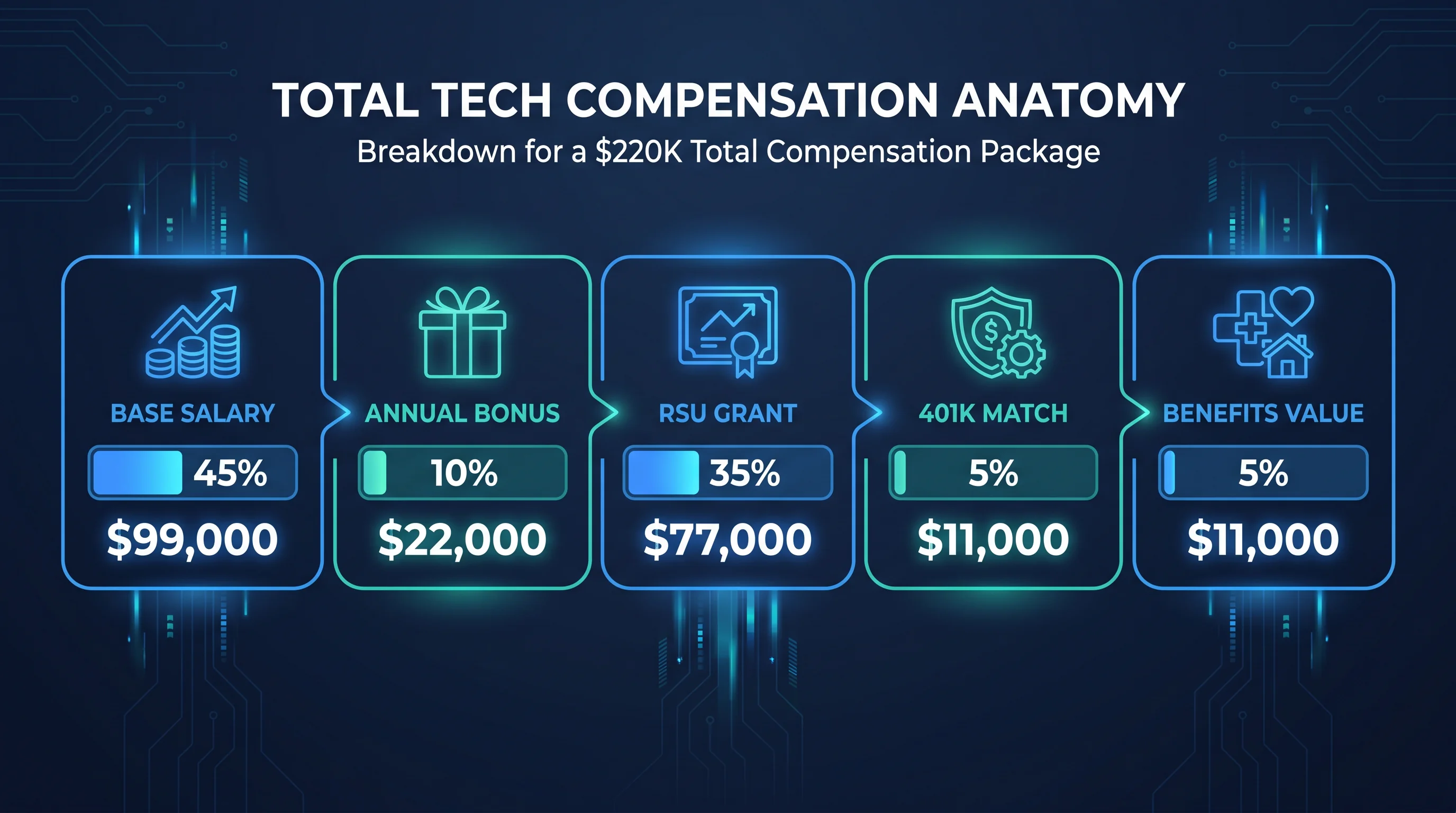
Total tech compensation anatomy — base, bonus, RSU, 401k, benefits — Illustrative. Educational only.
What We Cover
RSU vesting, 83(b) elections, and concentrated stock risk management
Mega backdoor Roth, after-tax 401(k), and asset location strategy
Coast FIRE projections and safe withdrawal rates for tech timelines
Total compensation analysis and offer comparison frameworks
Multi-state tax analysis for remote workers and relocators
Equity Wealth Planning
A four-year RSU cliff vesting schedule at a major tech company can deliver $180–$300K in annual equity income. Without a withholding and diversification plan, a significant portion disappears to taxes at the wrong time.
Use the RSU tax estimator
Coverage
Built for Software engineers with RSU-heavy comp, Hardware and infra leads, and Staff+ IC trajectories. Coverage concentrates on RSU tax surprise, Engineer financial independence, and AMT planning education, with guides and calculators that reflect how these readers actually earn, save, and plan.
Software engineers with RSU-heavy comp · Dual-engineer households
Hardware and infra leads · Engineers approaching FI decisions
Staff+ IC trajectories
In practice
Stratum Finance is an independent editorial desk covering RSU tax surprise, Engineer financial independence, and AMT planning education for Software engineers with RSU-heavy comp, Hardware and infra leads, and Staff+ IC trajectories. Spreadsheet-credible guidance for people who debug systems for a living and refuse hand-wavy finance copy. Guides state their assumptions, calculators run in your browser, and disclosures stay visible wherever regulated topics appear.
Featured tools
Free, in-browser calculators built for Software engineers with RSU-heavy comp, Hardware and infra leads, and Staff+ IC trajectories — adjust the assumptions and stress-test the outcome before you act.
Interactive
Project how regular contributions grow over time under different return, fee, and timeline assumptions.
Future value
$1,185,264
Projected ending balance under the current compounding path.
Your contributions
$460,000
Starting capital plus every monthly contribution.
Investment growth
$725,264
The share created by compounding instead of deposits.
Output path
The line updates immediately as you change the assumptions.
Year 0 to Year 20
Interactive
Compare your current mix against a target allocation and see where drift has crept in.
Enter current and target weights. The model normalizes them to 100% and flags any sleeve that sits outside your drift band.
equities
fixed Income
alternatives
cash
Largest sleeve
55%
Anything too dominant deserves extra governance.
Effective sleeves
2.6
A lower value means the portfolio behaves like fewer real bets.
Concentration score
0.39
Herfindahl-style concentration across the current weights.
equities
Current 55% vs target 60%
Drift: -5%. Keep this sleeve within +/-5% to stay inside the current policy.
fixed Income
Current 25% vs target 20%
Drift: 5%. Keep this sleeve within +/-5% to stay inside the current policy.
alternatives
Current 10% vs target 10%
Drift: 0%. Keep this sleeve within +/-5% to stay inside the current policy.
cash
Current 10% vs target 10%
Drift: 0%. Keep this sleeve within +/-5% to stay inside the current policy.
Interactive
Model your retirement runway from savings rate, timeline, and expected returns — then stress-test it.
Nominal balance
$3M
Raw dollars at the retirement start date.
Today's dollars
$2M
Inflation-adjusted view of the same future balance.
4% rule estimate
$130K
A quick annual draw estimate before tax planning.
Output path
The line updates immediately as you change the assumptions.
42 to 65
Sustainable real income
$112K
Approximate annual spending in today's dollars if the portfolio must last through retirement.
Membership
Reader
$0
Member
$4.99/month
Optional advisory
$99 intake
FAQ
Spreadsheet-credible guidance for people who debug systems for a living and refuse hand-wavy finance copy.
No. Materials are general education and illustration. Decisions involving securities, taxes, or planning should involve your own licensed professionals.
$4.99/month removes display ads for calmer reading and uninterrupted calculator sessions, and adds member features like saved scenarios as they ship. Cancel anytime.
Licensing disclosures; Niche-specific limitations; Privacy
Practical guides and scenario tools for engineerfinance professionals — every article ships with a calculator or scenario box.
Contact
Questions about a calculator or a guide? Send a note to the Stratum Finance editorial desk — we read every message. Licensing disclosures appear wherever regulated topics are discussed.
STEM professionals accumulate equity, options, and deferred comp from multiple sources. An assumption-transparent plan shows every input, output, and sensitivity.
Opens fenulwealthmanagement.com, our affiliated wealth-management firm · General education only · No fiduciary relationship formed on this page